85 Percent Lean Ground Beef Vs 79
By Stephen B. Smith, Ph.D.
Regents Professor, Department of Animal Scientific discipline
The net is awash in websites proclaiming the nutritional benefits of ground beef from grass-fed cattle. However, researchers in the Department of Brute Science at Texas A&M University accept published the only two research studies that actually compared the effects of ground beef from grass-fed cattle and traditional, grain-fed cattle on run a risk factors for cardiovascular disease (CVD) and type 2 diabetes in men. Was ground beef from grass-fed beef actually more healthful?
Americans consume approximately twoscore percentage of their full beef intake as basis beefiness, which is much higher in full fat than most intact cuts of beefiness. In fact, footing beefiness is i of the most important sources of the healthful monounsaturated fat acrid, oleic acrid in the diet (the importance of this is discussed below). Ground beef from grass-fed cattle naturally contains more omega-3 fat acids than from grain-fed cattle (three times as much) but is higher in saturated and trans-fat. At the other end of the spectrum is premium ground beef, such as from conventionally produced Certified Angus Beefiness or from cattle with Japanese genetics (bachelor every bit Wagyu or Akaushi ground beefiness). Footing beefiness from these cattle is very high in oleic acrid and is also much lower in saturated and trans-fat than ground beef from grass-fed cattle.
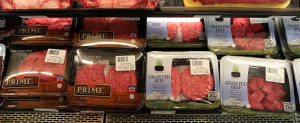 The information listed below is based on research conducted at Texas A&One thousand University, which compared the fatty acid composition of ground beef from grass-fed and grain-fed cattle. Basis beef from grass-fed and grain-fed cattle that contains approximately 10 to fifteen percent full fatty (85 to 90 pct lean) is available in retail stores, so the values listed below are for a 4-ounce basis beefiness patty (quarter pounder) that contains 85 pct lean (15 pct fat).
The most abundant omega-3 fatty acid in our foods is α-linolenic acid (ALA), which is ane of the two essential fatty acids that must be obtained from the diet (the other is linoleic acid, which is an omega-half-dozen fatty acid). ALA is constitute in flax seed and walnuts, merely Americans obtain most of their ALA from canola oil. Although the scientific studies are not conclusive, ALA may dull the rate of growth of cancer cells and may besides reduce risk factors for CVD. The Daily Reference Intake (DRI) of ALA is 1.1 grams per day for women and i.6 grams per day for men. And then, a quarter pounder ground beef patty from grass-fed cattle contains 0.055 of the 1.ane grams ALA required by women and 0.055 of the i.6 grams ALA required by men. In other words, that ground beef patty from cattle fed native Texas pastures contains only 5 pct of the DRI for ALA for women and but over 3 percent of the DRI for ALA for men. Yes, grass-fed ground beef contributes to the omega-3 fatty acids in our diets, merely can it be considered a meaning source of ALA?
For comparison, a tablespoon of canola oil (approximately 14 grams of canola oil) contains 1.iv g of ALA. This is more the DRI for women and nearly as much as the DRI for men. That same tablespoon of canola oil too contains 8.4 grams of oleic acid, which is similar to the amount of oleic acid in olive oil. Researchers take known for decades that oleic acid has positive health benefits, such as reducing LDL-cholesterol (the bad cholesterol) and perhaps increasing HDL-cholesterol (the good cholesterol). The World Health Organisation has recommended that intake of oleic acid should exist xv to 30 percent of daily energy intake. For women, that would be equal to 25 – 50 grams of oleic per twenty-four hour period, whereas for men, that would be equal to forty – 80 grams of oleic per day. Research in the Department of Creature Science has shown that men consume about 20 grams of oleic acrid per day, and women consume about 12 grams of oleic acrid per day, but this can exist nigh doubled by consuming ground beef loftier in oleic acid, such equally ground beef from grain-fed cattle or cattle with Japanese genetics.
| Omega-3 fat acids | Oleic acrid | Total saturated and trans-fat | |
| Ground beef from grass-fed (grazing on native Texas pasture) | 0.055 grams | 6.three grams | 9.8 grams |
| Ground beefiness from grain-fed cattle (fed a feedlot diet containing primarily corn and milo) | 0.020 grams | 8.three grams | eight.2 grams |
Grass feeding definitely does non increase the amount of oleic acrid in beefiness. The quarter pound ground beef patty from grain-fed cattle contains over ii grams more oleic acid than footing beef from grass-fed cattle. In fact, the grain-fed ground beef patty contains nigh the aforementioned amount of oleic acrid as the tablespoon of canola oil. Also, footing beef from grass-fed cattle has two grams more saturated fat plus trans-fat than the patty from grain-fed cattle.
Then, which is better, more omega-iii fatty acids (grass-fed) or more than oleic acrid with less saturated/trans-fats (grain-fed)? Studies in the Department of Animal Science demonstrated the effects of ground beefiness from grass-fed and grain-fed cattle. Men consumed both types of ground beef for five weeks in randomized crossover trials. In older, mildly hypercholesterolemic men, ground beef from grass-fed cattle decreased HDL-cholesterol. In men with normal cholesterol levels, only footing beef from grain-fed cattle increased HDL-cholesterol. Neither ground beef type increased LDL-cholesterol in men. Research by the Section of Animal Science similarly demonstrated that consuming ground beefiness does not bear upon LDL-cholesterol in postmenopausal women.
In men, plasma insulin was decreased by basis beef from both grass-fed and grain-fed cattle, indicating that basis beef in general reduces this of import risk cistron for blazon II diabetes. Thus, neither type of ground beef had negative furnishings on risk factors for CVD or type Ii diabetes, just the ground beef from the grain-fed cattle provided more positive wellness benefits by increasing HDL-cholesterol.
What about the cholesterol content of ground beefiness? Many websites claim that beefiness from grass-fed cattle is lower in cholesterol than beefiness from conventionally raised cattle. An splendid study from Texas Tech University demonstrated that at that place is no departure in cholesterol in ground beef from grass-fed and grain-fed cattle if the fat content is like. Early on research conducted at Texas A&Thousand Academy demonstrated that the cholesterol in beef and beef products is stored in both the lean and the fatty within the meat. If yous trim all of the fat from beef (including the marbling), there volition be almost 45 milligrams of cholesterol in a 4 ounce serving of beef. For every 1 percent increase in total fatty content there is a one-milligram increment in cholesterol. So, ground beef that is 95 percentage lean (5 percent fat) contains about fifty milligrams of cholesterol and basis beef that is 85 per centum lean (15 percentage fat) contains 60 milligrams of cholesterol. This is as true for beef from grass-fed beef every bit it is for beefiness from grain-fed cattle.
And so, at this bespeak, there is no scientific evidence to support the claims that footing beefiness from grass-fed cattle is a healthier alternative to ground beefiness from conventionally raised, grain-fed cattle.
-30-
S.B. Smith is a Texas A&Chiliad AgriLife Research meat scientist in the Section of Animal Science at Texas A&M Academy and has published more than than 180 scientific articles, most of which describe the nutritional quality of pork and beef.
For more than information regarding news from the Section of Creature Science, College of Agronomics and Life Sciences, Texas A&M University, delight contact Courtney Coufal at cacoufal@tamu.edu or (979) 845-1542.
Source: https://animalscience.tamu.edu/2013/12/07/ground-beef-from-grass-fed-and-grain-fed-cattle-does-it-matter/
0 Response to "85 Percent Lean Ground Beef Vs 79"
Post a Comment